
NYC Benchmarking Law: Local Law 84 Compliance Guide for Building Owners
In 2009, New York City enacted several local laws as part of the city’s Greener, Greater Buildings Plan to improve energy efficiency in existing buildings, reduce energy costs, and lower greenhouse gas emissions.
One of these laws, New York City Benchmarking Law (Local Laws 84/09 and 133/16), mandates the owners of mid-sized and large buildings submit an annual analysis of their energy usage using an online benchmarking tool created by the EPA. Benchmarking energy and water use enables owners, managers, residents, and building professionals to better understand their buildings’ performance.
Under NYC Benchmarking Law, individual buildings exceeding 25,000 gross square feet, two or more buildings on the same tax lot collectively exceeding 100,000 gross square feet, and two or more condominium buildings governed by the same board of managers collectively exceeding 100,000 gross square feet are generally required to benchmark annually. The law also applies to qualifying City-owned buildings.
Required Usage Data
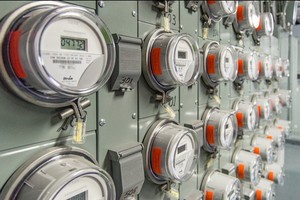
By May 1 every year, building owners are required to submit consumption data for all applicable energy sources and, where required, water, for the previous calendar year:
- Electricity
- Natural gas
- Fuel oil
- District steam
- Other applicable energy sources
- Water (for buildings required to report water consumption)
Benchmarking must account for whole-building energy consumption, including residential, commercial, and common area usage, subject to applicable exemptions. Aggregated utility data can be used rather than reporting consumption for individual dwelling units separately.
EPA Portfolio Manager
Energy and, where required, water consumption data for the previous calendar year (January 1 through December 31) must be entered into ENERGY STAR Portfolio Manager. Building owners must also connect and share their properties with the City through Portfolio Manager to complete the benchmarking submission. DOB recommends doing so at least 15 business days before the May 1 deadline.
The Portfolio Manager
enables owners and
managers to track energy
and water usage
for their buildings.
The Portfolio Manager enables building owners and managers to track and assess energy and water usage for their buildings, identify under-performing buildings, verify energy efficiency improvements, and receive EPA recognition for superior energy performance (for eligible properties). Using the Portfolio Manager, owners and managers will be able to analyze their building’s energy use over time and compare it with other buildings of similar size and type.
New York City makes annual building energy and water benchmarking data publicly available through NYC Open Data
Obtaining Utilities Data
Building owners must collect energy and, where required, water consumption data for the entire building, including tenant usage.
Energy Usage Data: Building owners can request aggregated building energy consumption data from Con Edison and National Grid. Both utilities offer automated uploads of consumption data to ENERGY STAR Portfolio Manager. Buildings that use fuel oil or other energy sources must obtain consumption data from their suppliers or utility bills and enter it into Portfolio Manager as applicable.
Water Usage Data: The NYC Department of Environmental Protection (DEP) provides automated uploads of water consumption data to ENERGY STAR Portfolio Manager for buildings required to report water usage that have had an automatic meter reader (AMR) installed for at least the entire previous calendar year. Building owners must share their property with DEP through Portfolio Manager to receive automated uploads.
For additional instructions on obtaining and reporting utility consumption data, visit the NYC Department of Buildings’ Energy and Water Data page.
Covered Buildings
Building owners can determine whether their properties are subject to NYC Benchmarking Law by reviewing the annual Covered Buildings List published on the NYC Department of Buildings’ Benchmarking page. Certain properties are exempt, including qualifying Tax Class 1 properties and garden-style apartments.
NYC Benchmarking Law Compliance Deadlines
| May 1 | Annual benchmarking submission deadline for the previous calendar year’s energy and, where required, water consumption data |
| Aug 1 | Second quarterly deadline (if May 1 deadline is missed) |
| Oct 1 | Building Energy Efficiency Rating labels available for download via DOB NOW Public Portal |
| Oct 31 | Deadline to post Building Energy Efficiency Rating labels |
| Nov 1 | Third quarterly deadline (if May and Aug deadlines missed) |
| Feb 1 | Fourth quarterly deadline (final chance to file for the previous calendar year) |
Penalties for Non-compliance
Failure to submit a compliant benchmarking report by May 1 may result in a $500 penalty. Additional penalties of $500 may be assessed each quarter that the building remains noncompliant, up to $2,000 per year.
Local Law 33 of 2018: Energy Efficiency Grades
Owners of buildings that are subject to NYC Benchmarking Law are required to post energy efficiency letter grades issued by the city per Local Law 33 of 2018 as amended by Local Law 95 of 2019.
Energy efficiency grades are assigned annually based on benchmarking compliance and, for eligible buildings, ENERGY STAR energy efficiency scores, as follows:
- A – score is equal to or greater than 85;
- B – score is equal to or greater than 70 but less than 85;
- C – score is equal to or greater than 55 but less than 70;
- D – score is less than 55;
- F – for buildings that didn’t submit required benchmarking information;
- N – for buildings exempted from benchmarking or not covered by the Energy Star program.
Building Energy Efficiency Rating labels are available annually beginning October 1 through the DOB NOW Public Portal. Building owners must display the label in a conspicuous location near each public entrance by October 31 and keep it posted until October 1 of the following year. Failure to comply may result in a DOB violation and a penalty of $1,250.
RAND’s Benchmarking Services
RAND provides the following services to help buildings comply with NYC Benchmarking Law:
- Create an account log-in and building profile on the Portfolio Manager website.
- Compile relevant building information, including building gross square footage and gross floor area of both residential and commercial spaces.
- Assist building owners and managers with obtaining energy usage information.
- Analyze energy use data for completeness, ensuring it is suitable for entering it into the Portfolio Manager, and modifying as necessary in accordance with Local Law 84/09 guidelines.
- Enter energy use data into the Portfolio Manager.
- Using the Portfolio Manager, generate the custom Energy Report required for submission to the New York City Department of Finance. The Energy Report will include the building’s profile, summary information, and estimates of its energy usage (BTUs and dollar amount per square foot).
- Provide a written report that includes an explanation of how to access the energy data and the calculation methods used for analysis, copies of the data entered into the Portfolio Manager, a confirmation e-mail from the EPA, and the final Energy Report. All information will be retained for three years after the May 1 deadline.
- Answer any follow-up questions that owners, managers, and boards may have about the Energy Report.
For More Information
Visit the NYC Department of Buildings’ Benchmarking page for additional information on NYC Benchmarking Law. For questions or to request a proposal for benchmarking services, contact RAND at 212-675-8844 or info@randpc.com.