
Green Roofs: Design, Benefits and Requirements
Answers to commonly asked questions about green roofs.
What Is a Green Roof?
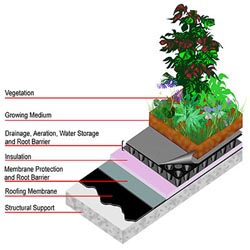
A green roof—sometimes called a sustainable roofing system, eco-roof, rooftop garden, vegetated rooftop, or sky garden—consists of layers of vegetation and specially engineered soil laid over a conventional roofing surface. Green roofs typically have a protective root barrier underneath the vegetation and soil, a standard roofing membrane, and for some systems, a structural support system.
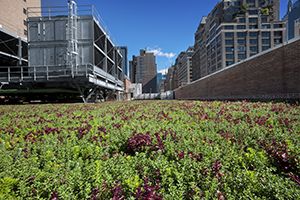
Vegetation and soil add extra layers of insulation to roofs, lowering heating and cooling costs as well as dampening noises.
Types of Green Roofs
There are two basic types of green roof systems: extensive and intensive. The main differences between the two are soil depth, weight, cost, maintenance, plant selection, and function.
Extensive Systems
Extensive green roofs have a shallow soil base, usually a formulated compost two to six inches deep. The soil holds grasses, sedum (species of succulent, water-storing plants), wildflowers, and mosses—plants that can thrive in a rooftop environment with limited water, shallow roots, and sparse nutrients.
In one popular type of extensive system, the soil and vegetation is contained in modular trays that rest on the roof. The vegetation grows approximately one inch over the trays and forms a seamless layer with the plants in adjacent trays.
Extensive green roofs place less of a load on the roof than the deeper and heavier intensive green roof systems, but they are not designed for heavy foot traffic. The underlying trays can be removed, allowing access for checking the underlying roofing membranes.
Extensive green roofs are designed to be self-sustaining and require minimal maintenance: checking roof drains, an annual weeding, and perhaps an application of slow-release fertilizer to promote growth. The vegetation may brown out over dry summers, but the plants revive once the rainy season begins. Because they are lightweight and require only a minimum of care, extensive green roofs are usually less expensive to install and maintain than intensive green roof systems.
Intensive Systems
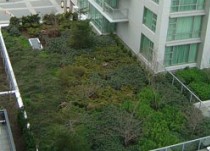
Intensive green roof (so called because they are more labor intensive) have a deeper soil—typically eight to 24 inches—and heavier weight than extensive green roofs. The deeper soil allows more plant diversity, including a wide range of vegetables, shrubs, and sometimes even trees, which can make them more attractive than extensive roofs in the dry season. The sturdier, heavier soil base also allows extensive systems to be used as roof gardens.
Intensive roofs generally require an underlying roof structure with high-load bearing capacity to support the weight of a deeper growing medium and larger plants. Intensive roofs also require regular care, which may include irrigation, depending on soil depth and plant selection.
Benefits of Green Roofs
- Green roofs offer many benefits that conventional roofs do not:
- Green roofs add usable space and an aesthetically pleasing appearance to roofs, increasing a building’s property value.
- Vegetation and soil layers protect roofing membranes from ultraviolet radiation, extending the life of the membranes to up to twice as long as those on a conventional roof.
- The soil and vegetation provide additional insulation to the roof, reducing heating and cooling costs approximately 10% to 30% and allowing the building to use smaller HVAC equipment.
- The vegetation and soil layers reduce noise from traffic, planes, machinery, and other surrounding sounds for building residents.
- The soil absorbs rain, reducing storm water runoff.
- The vegetation improves air quality from the increased oxygen/carbon dioxide exchange.
- Green roofs reduce the urban heat island effect, in which the abundance of brick, concrete, asphalt, and other hard surfaces that absorb heat increase the ambient temperature in cities more than in the surrounding areas.
- Green roofs create biodiversity in urban areas by providing sanctuary for birds, butterflies, and other insects.
- Buildings with green roofs receive credits toward LEED (Leadership in Energy and Environmental Design) certification, which qualifies them for tax rebates, zoning allowances, and other incentives.
- New York State offers a property tax credit of $5.23 per square foot of the roof area planted with vegetation (see Green Roof Tax Abatement Renewed and Raised).
Costs of Green Roofs
Green roof cost approximately $25 to $30 per square foot, which includes the design, materials, labor, and installation. This estimate, however, does not include the standard costs for replacing or repairing the underlying roof itself if needed. So, for example, if it costs $35 per square foot to replace a deteriorating roof with a standard roofing system, it would cost approximately $60 to $65 per square foot to install a green roof and new underlying roof.
Properly installed green roofs
are compatible with
No Dollar Limit warranties.
A green roof also can be installed over an existing roof, provided the underlying roof structure and membranes are in sound condition. Keep in mind that green roofs typically are not installed over the entire roof surface, so the costs per square foot for a green roof apply only to the area covered.
The higher upfront costs of installing a green roof should be weighed against the longer-term savings from decreased energy and equipment costs, lower maintenance, increased longevity of the roofing membranes, and any available tax rebates and other credits.
Green Roofs and Roofing Warranties
Properly installed green roofs are compatible with No Dollar Limit (NDL) warranties offered by most roofing manufacturers. It is recommend that the building’s engineer or architect consult with the roofing manufacturer in the design phase and keep them involved throughout the project. That way any concerns the warranty could be voided because of design or installation details can be addressed before the fact. This holds true whether the roof is being replaced with a new underlying roof that will have a green roof installed on top, or a green roof is being retrofitted onto an existing roof with an NDL warranty already in effect.
Green Roof Feasibility Study
A green roof is not suitable for every building. Before beginning any green roof project, it is strongly recommend that building owners and managers consult with the proper building and design professionals, who will evaluate a host of factors, such as:
- The existing roof construction (roof slope, concrete vs. wood roof deck, parapet height, etc.)
- Condition of roofing membranes and underlying roof deck
- Existing roof’s load-bearing capacity
- Roofing warranties
- Waterproofing ability, drainage, and electrical and water supply on roof
- Sun and wind exposure
- Zoning restrictions
- Code compliance
- Maintenance issues and costs
A feasibility study should be conducted before installing a green roof, examining the factors above. If the building is a candidate for a green roof, the study should recommend the most appropriate type of system and provide preliminary budget projections for its installation.